




How to Measure Sleeve Length: Men's Dress Shirt Guide
In Short: To measure dress shirt sleeve length accurately, start at the center back of your neck, run a soft measuring tape across the shoulder, then continue down the outside of a slightly bent arm to just past the wrist bone. Measure both arms and use the longer measurement. For the best result, have someone help you keep the tape flat and in position.
Sleeve length is one of the most important measurements in getting a dress shirt to fit correctly. Too short and the sleeve rides up when you move. Too long and excess fabric bunches around the wrist. Getting it right helps your shirt feel comfortable, look polished, and sit properly beneath a suit or sport coat.
Why Sleeve Length Matters
Correct sleeve length affects more than how a shirt looks when your arms are at your sides. Your sleeves need enough length to move naturally with you throughout the day without pulling up every time you bend an elbow or reach forward.
It also affects how your dress shirt works with tailoring. A properly sized shirt cuff should sit naturally around the wrist and allow a small amount of cuff to show beneath a suit or sport coat sleeve.
Just as importantly, accurate sleeve length improves comfort. Sleeves that are too short can feel restrictive, while sleeves that are too long create excess fabric around the cuff and can make an otherwise well-fitting shirt look sloppy.
Step-by-Step Guide to Measuring Sleeve Length Accurately
For the most accurate result, use a soft fabric measuring tape and ask someone to help you. Stand naturally with your shoulders relaxed rather than trying to hold an unnaturally rigid posture.
1. Start at the Center Back of the Neck
Place the end of the measuring tape at the base of your neck, directly below the collar line at the center of your back.
This starting point matters because dress shirt sleeve length includes more than the arm itself. Beginning at the center back accounts for the distance across the shoulder before the sleeve begins.
2. Measure Across the Top of the Shoulder
Run the tape from the center back of the neck across the top of the shoulder to the point where the arm begins.
Keep the tape flat against the body rather than allowing it to sag. This portion of the measurement accounts for shoulder width and helps prevent the finished sleeve measurement from coming up too short.
3. Follow the Arm Down to the Wrist
With the arm slightly bent, continue the tape down the outside of the arm, over the elbow, and toward the wrist.
The slight bend is important. Your arm isn't perfectly straight during normal movement, so measuring with a completely straight arm can result in sleeves that feel too short when you're actually wearing the shirt.
4. Check the Cuff Placement
Continue the measurement to just past the wrist bone, where a dress shirt cuff would naturally rest.
This gives the sleeve enough length to move comfortably while allowing the cuff to sit correctly beneath a jacket sleeve.
5. Repeat on the Other Arm
Measure the opposite arm using the same method.
It's normal for one arm to be slightly longer than the other. Use the longer measurement when selecting your shirt size so both sleeves have enough length.
6. Record the Sleeve Length in Inches
Write down the final measurement in inches. Dress shirt sleeve lengths are commonly offered in whole- or half-inch increments.
If your measurement falls between available sizes, use the nearest appropriate increment rather than guessing based on a shirt you already own.
7. Double-Check With Assistance if Possible
If you measured yourself, repeat the process with someone assisting you before ordering.
Self-measuring can introduce errors because it's difficult to keep the tape positioned correctly across your back, shoulder, elbow, and wrist while also reading the measurement.
Sleeve Length Measurement at a Glance
| Step | What to Do | Why It Matters |
|---|---|---|
| 1 | Start at the center back of the neck | Includes the shoulder span in the full sleeve measurement |
| 2 | Run the tape across the shoulder | Accounts for shoulder width |
| 3 | Measure down a slightly bent arm | Allows enough length for natural movement |
| 4 | Stop just past the wrist bone | Positions the cuff where it naturally sits |
| 5 | Measure both arms | Accounts for natural differences in arm length |
| 6 | Record the result in inches | Lets you compare the measurement with available shirt sizes |
Tips for Accurate Sleeve Length Measurements
- Use a soft measuring tape. A flexible fabric tape follows the contours of the shoulder and arm more accurately than a rigid metal tape.
- Keep the tape flat. Don't pull it too tight or allow it to sag away from the body.
- Bend the arm slightly. This accounts for natural movement and helps prevent sleeves from riding up.
- Stand naturally. Slouching or forcing your shoulders back can change the measurement.
- Ask someone to help. Assistance makes it much easier to keep the tape properly positioned.
- Measure both arms. If there's a difference, use the longer measurement.
- Measure over a lightweight shirt or directly against the body. Bulky clothing can add unnecessary length.
Common Mistakes to Avoid When Measuring Sleeve Length
Small measuring errors can translate into a noticeable fit problem once the shirt is on. Watch for these common mistakes.
- Starting at the shoulder instead of the neck: Measuring only from the shoulder to the wrist leaves out the back-to-shoulder distance and can result in a sleeve that's too short.
- Keeping the arm completely straight: This doesn't account for the natural bend at the elbow and can make sleeves ride up when you move.
- Pulling the tape too tightly: A tight tape shortens the measurement and doesn't reflect how the shirt needs to move on the body.
- Letting the tape sag: Extra slack adds unnecessary length and can result in sleeves that bunch around the wrist.
- Measuring over bulky clothing: Thick layers distort the path of the tape and can increase the measurement.
- Measuring only one arm: Natural differences between arms are common, so checking both helps you choose a more comfortable fit.
How Paul Fredrick Helps You Get the Perfect Sleeve Length Every Time
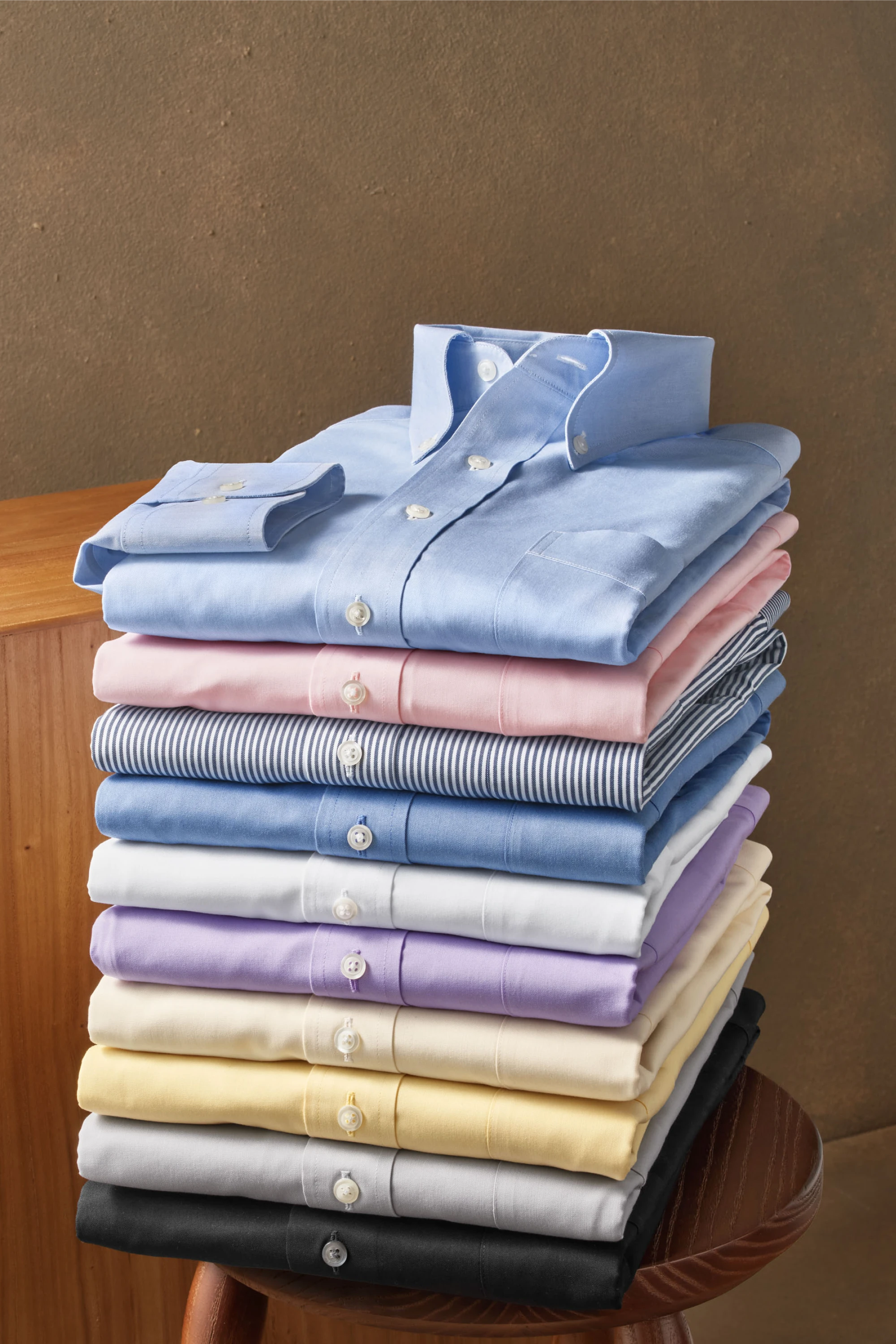
Dress shirt fit isn't one-size-fits-all. Sleeve length works together with neck size, body fit, collar style, and other measurements to determine how a shirt actually looks and feels once you're wearing it.
Paul Fredrick offers men's dress shirts across a broad range of sizes and fits so you can choose proportions that work for your frame rather than settling for a generic size.
And if the fit isn't quite right, the Paul Fredrick Perfect Fit Guarantee makes it easier to find the size that works for you.